
Guides · Pool enclosures
Pool Cage Guides
Written by the crew that does the work, for Tampa homeowners trying to decide what to do about their enclosure and whether the quote in front of them is fair.
Latest
Guides
Each of these answers a question we get asked often enough during panel counts that it was worth writing down properly. No filler, and a number you can act on in every one.
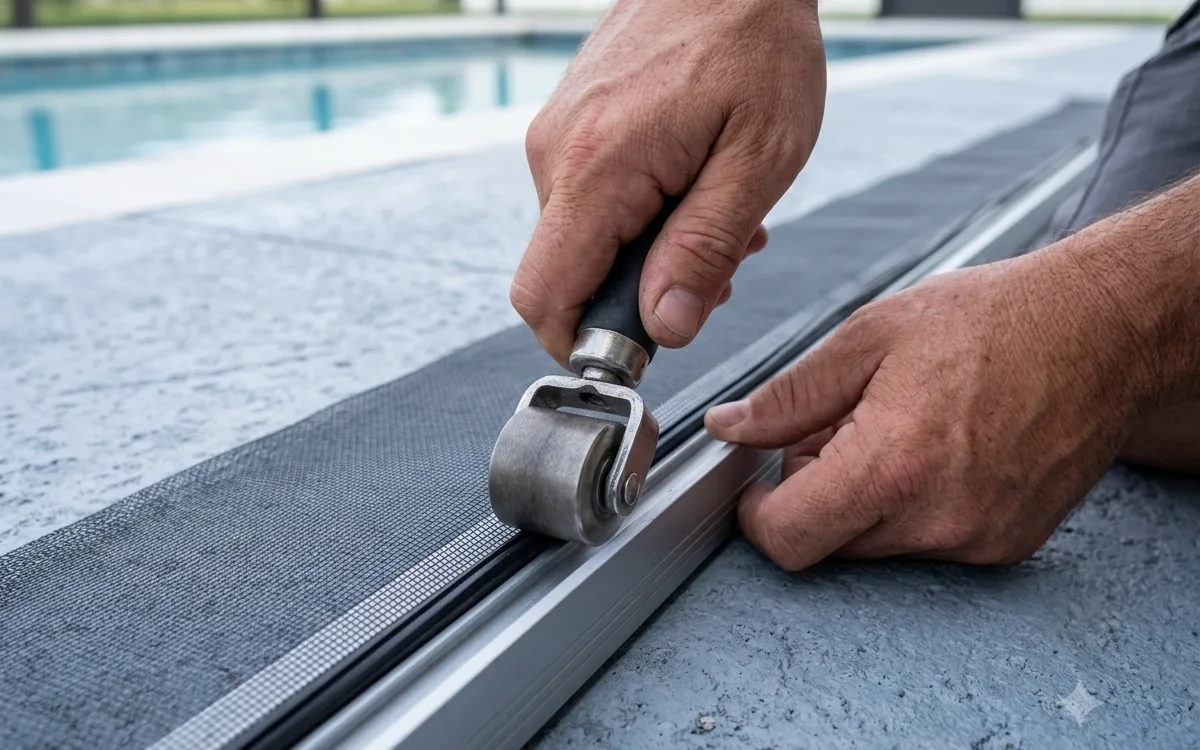
How Much Does Pool Cage Rescreening Cost in Tampa?
Real dollar ranges for wall, roof and gable panels, plus what actually moves the price up or down.
Read guide →
Why Pool Screen Repair Is Priced Per Panel, Not Square Footage
Two enclosures with the same square footage can have a very different number of panels. That is what drives the price.
Read guide →
How Long Does a Pool Cage Rescreen Actually Take?
Most single-story rescreens wrap up in a day. Here is where every hour of that day actually goes.
Read guide →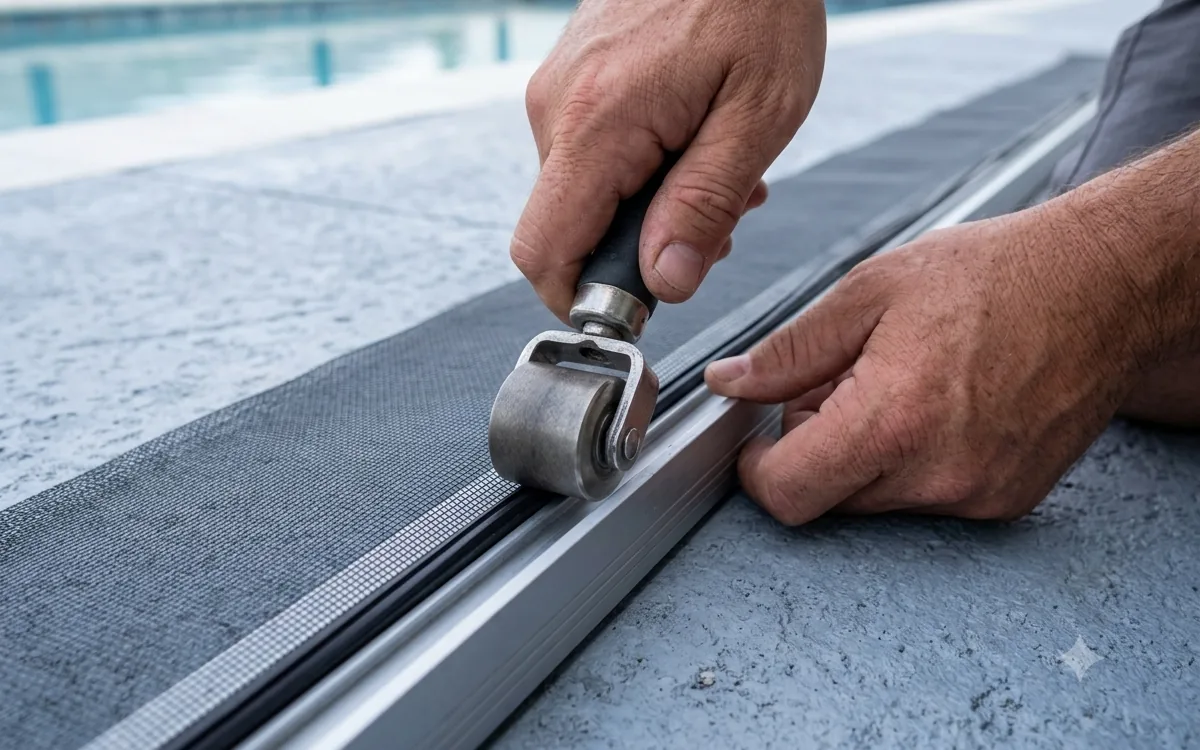
Can You Replace Just One or Two Pool Screen Panels?
You do not need a full rescreen for one torn panel. Here is when a spot repair makes sense.
Read guide →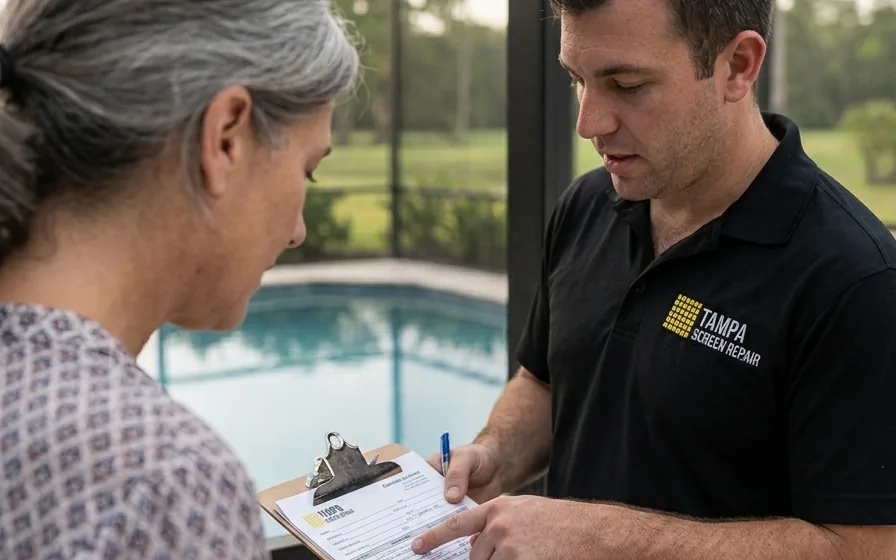
How to Count Your Pool Cage Panels Before You Call
Five minutes with a phone camera gets you a panel count, and a panel count is what turns a vague quote into a comparable one.
Read guide →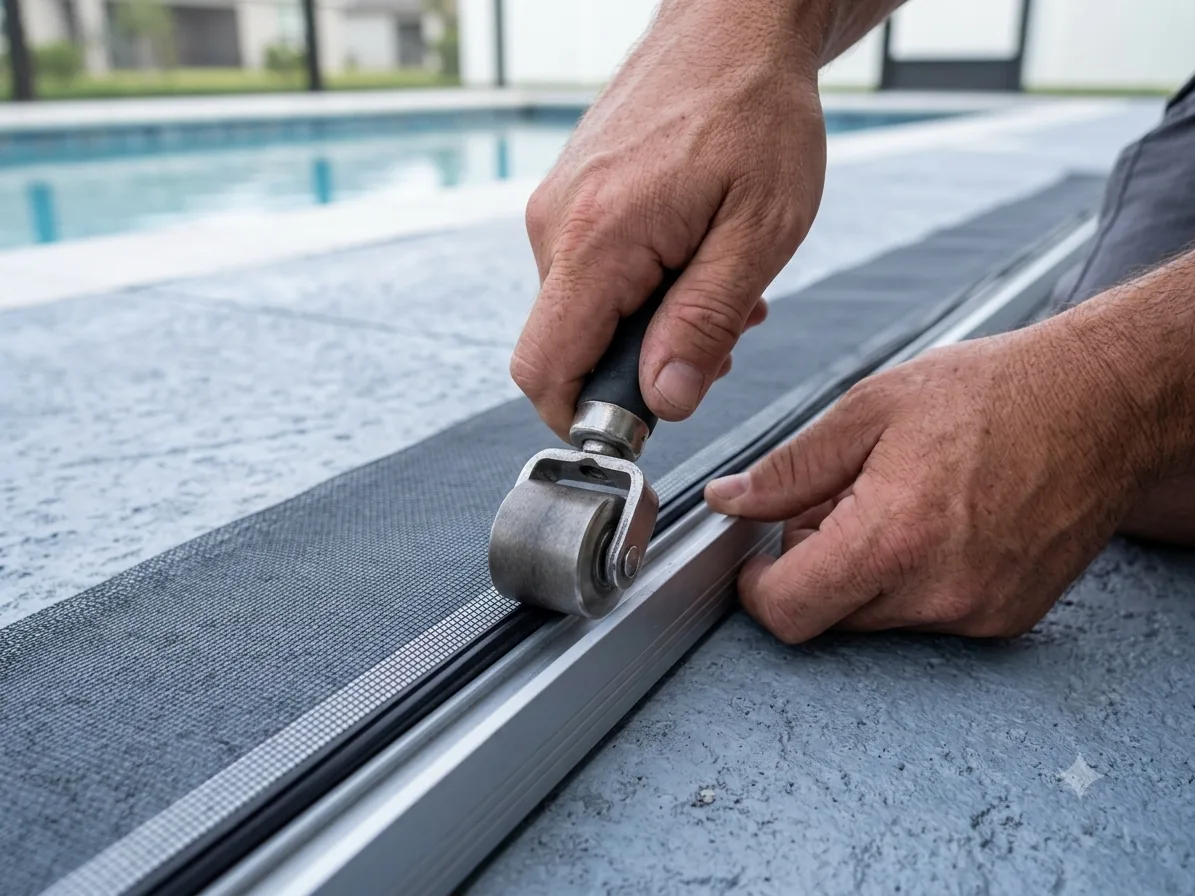
Why Your Pool Screen Rescreen Sagged or Failed Early
New screen should stay drum-tight for years. If it sagged in months, one of four things went wrong.
Read guide →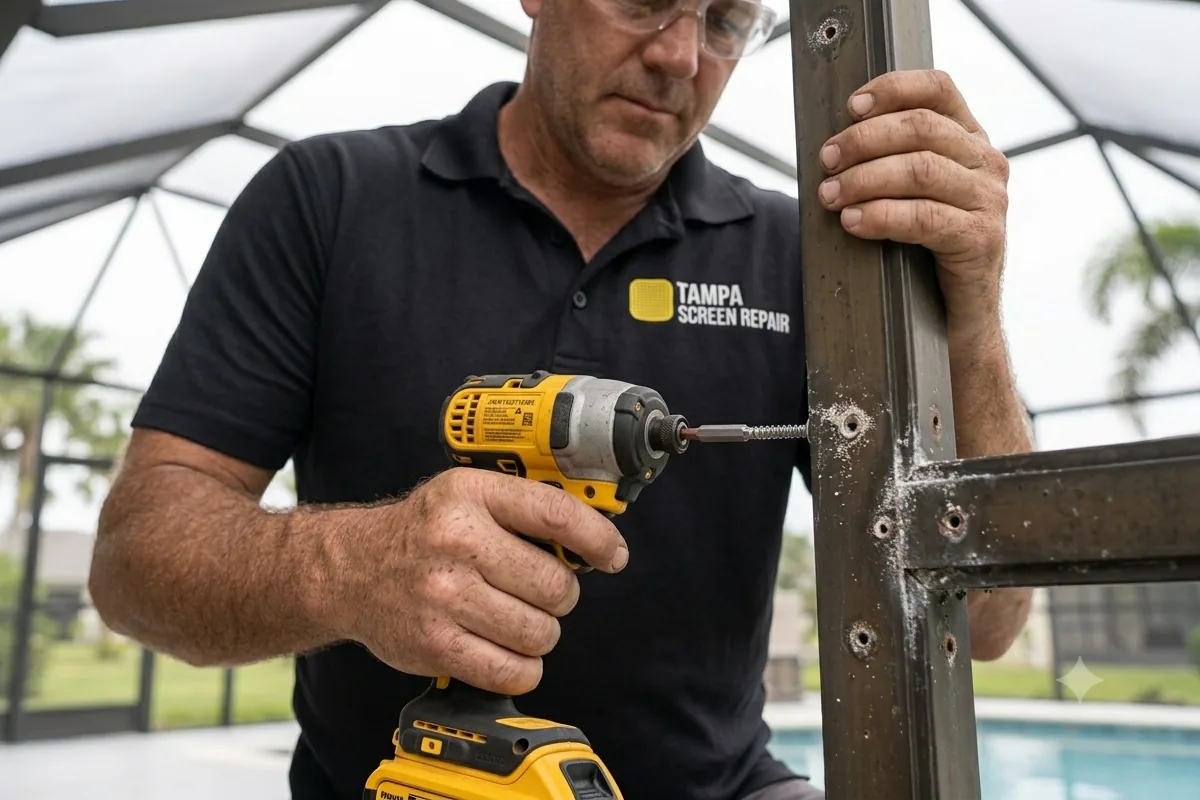
5 Signs Your Pool Cage Frame Needs Repair Before Rescreening
New screen on a bad frame fails fast. Check for these five signs before you pay for a rescreen.
Read guide →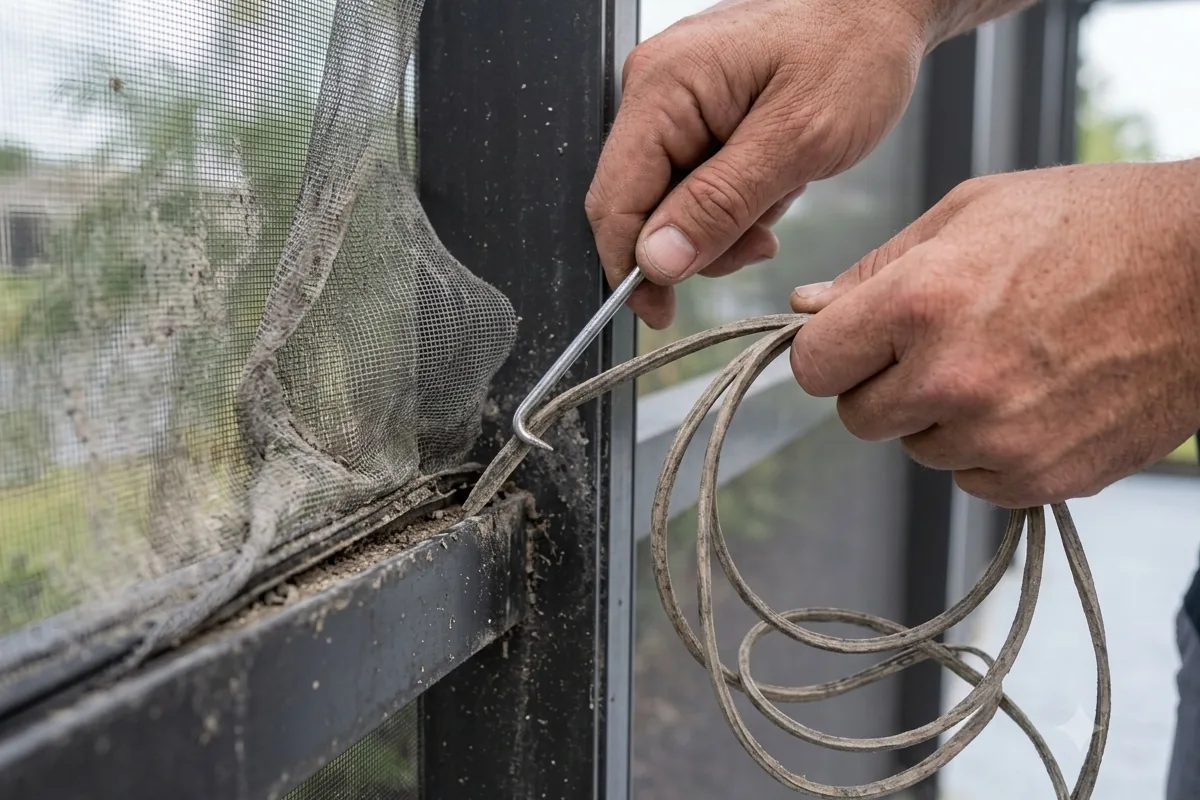
Do You Need to Drain Your Pool for Screen Enclosure Repair?
No. Your pool stays filled and swimmable through almost every rescreen or repair we do.
Read guide →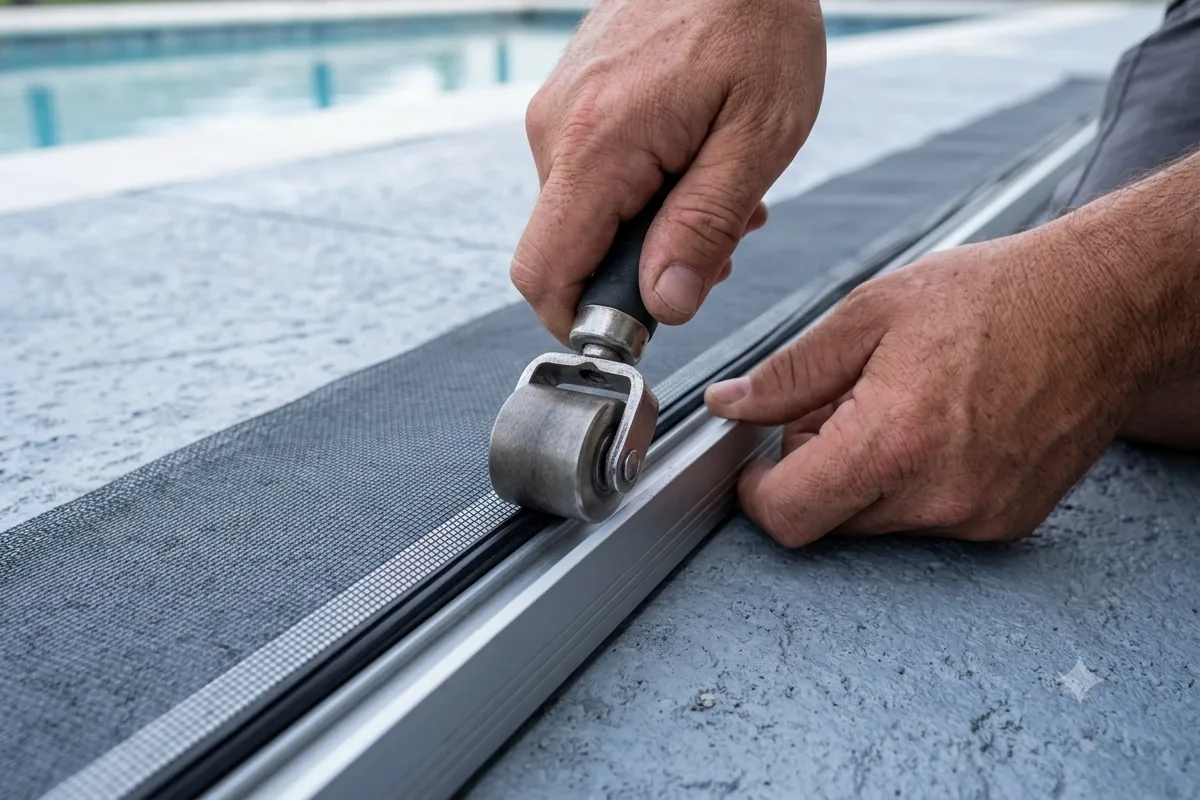
A Property Manager's Guide to Pool Cage Rescreening and HOA Approval
Board approvals and multi-unit access add steps a single-family rescreen never has. Here is how to run the project.
Read guide →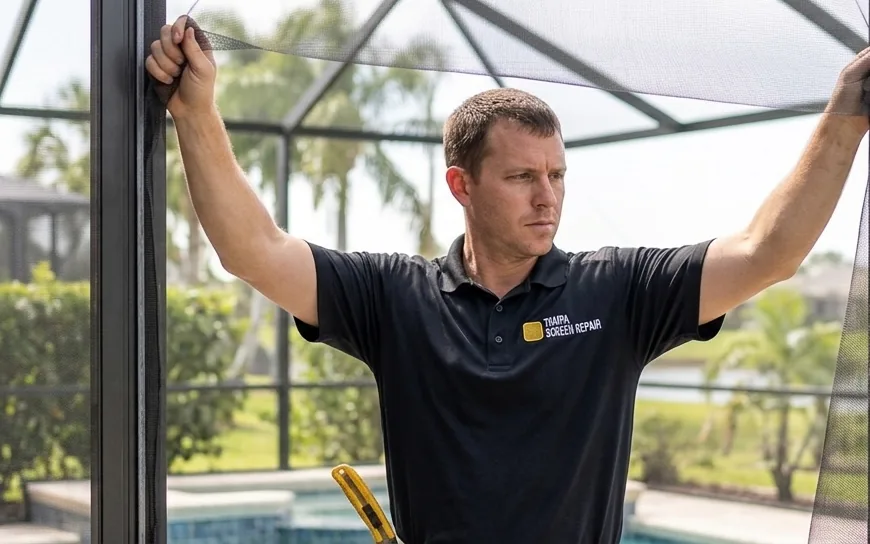
Roof Screens vs. Wall Panels: Which Fails First
Roof panels take roughly double the UV load of wall panels, which is why the cheapest quotes leave them out.
Read guide →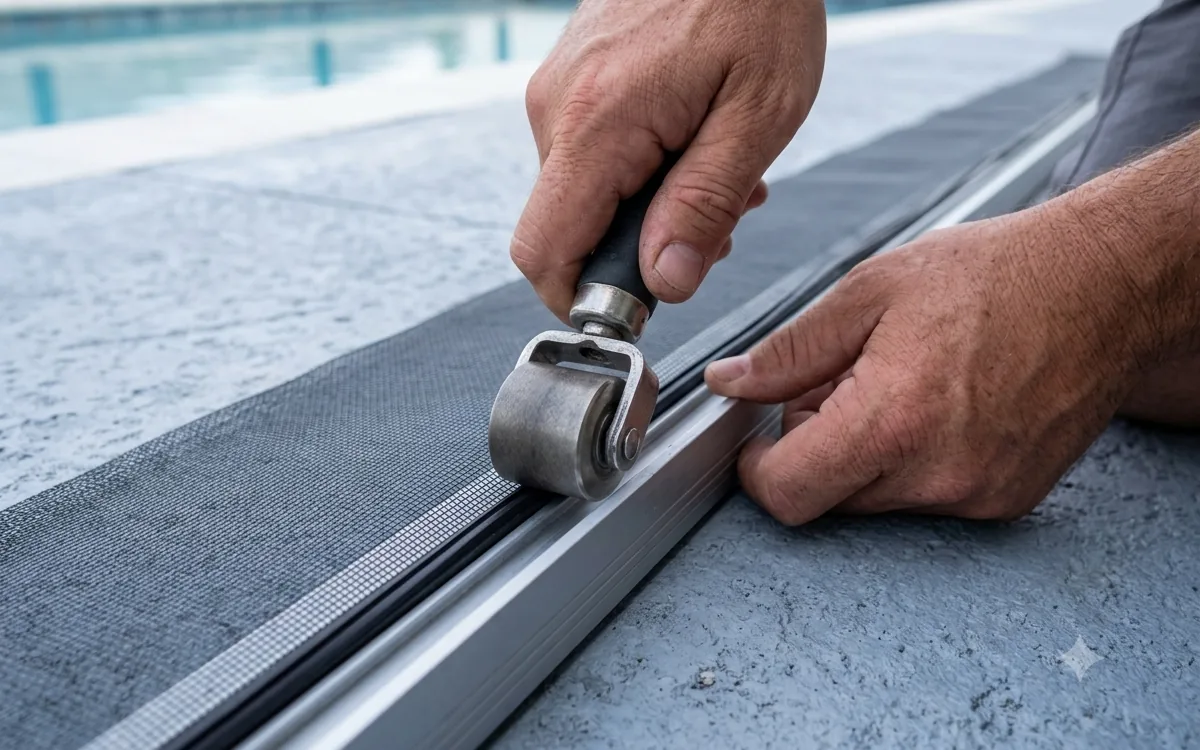
Choosing Pool Screen Mesh Wall by Wall
Your west wall, your kick plate row and your lake-facing wall have three different problems. One mesh cannot solve all three.
Read guide →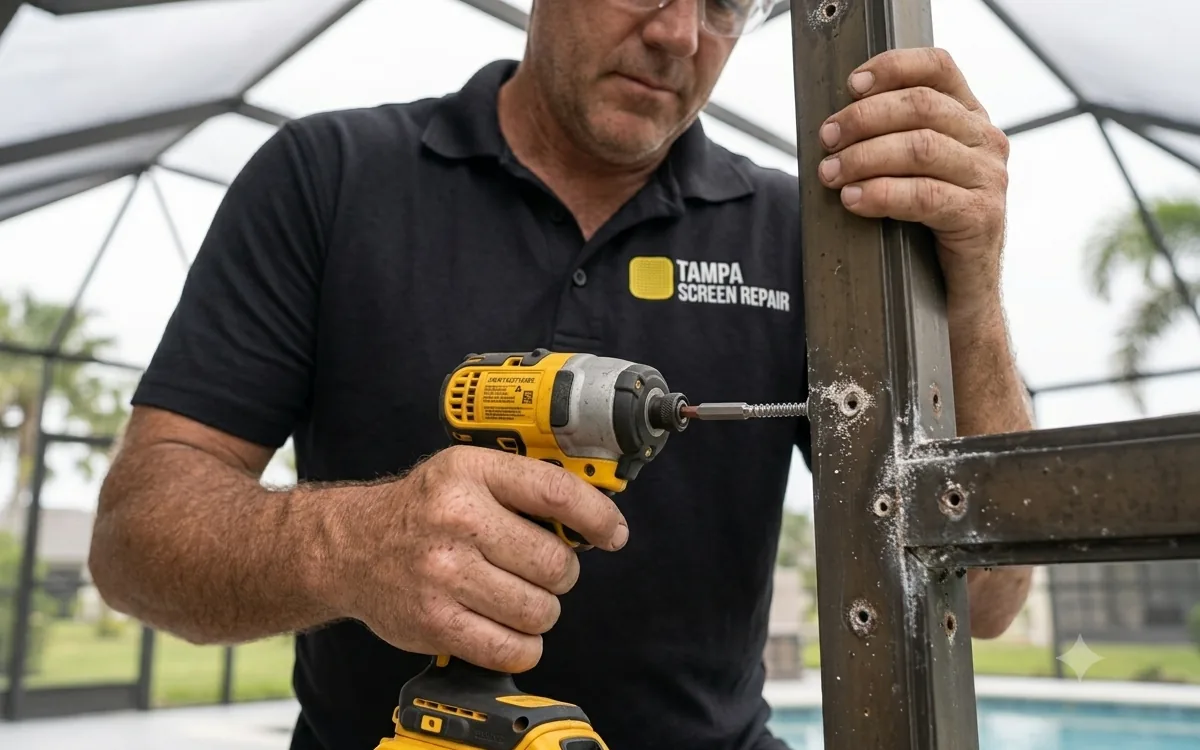
What Florida Wind Code Means for Your Pool Cage
Why cages built before 2002 behave differently in a storm, and what that changes about how yours should be repaired.
Read guide →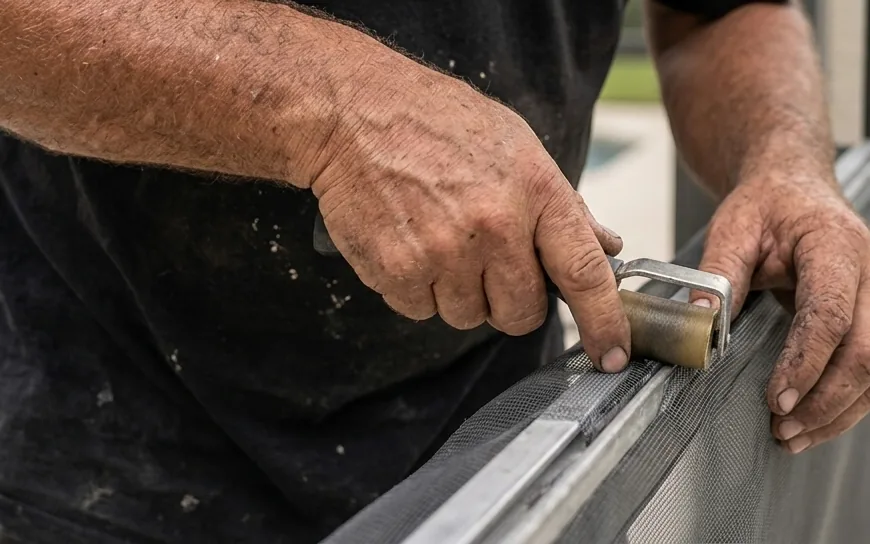
A Realistic Pool Cage Maintenance Schedule
What to actually check each year, what is a waste of a Saturday, and the two things that decide whether your cage survives a storm.
Read guide →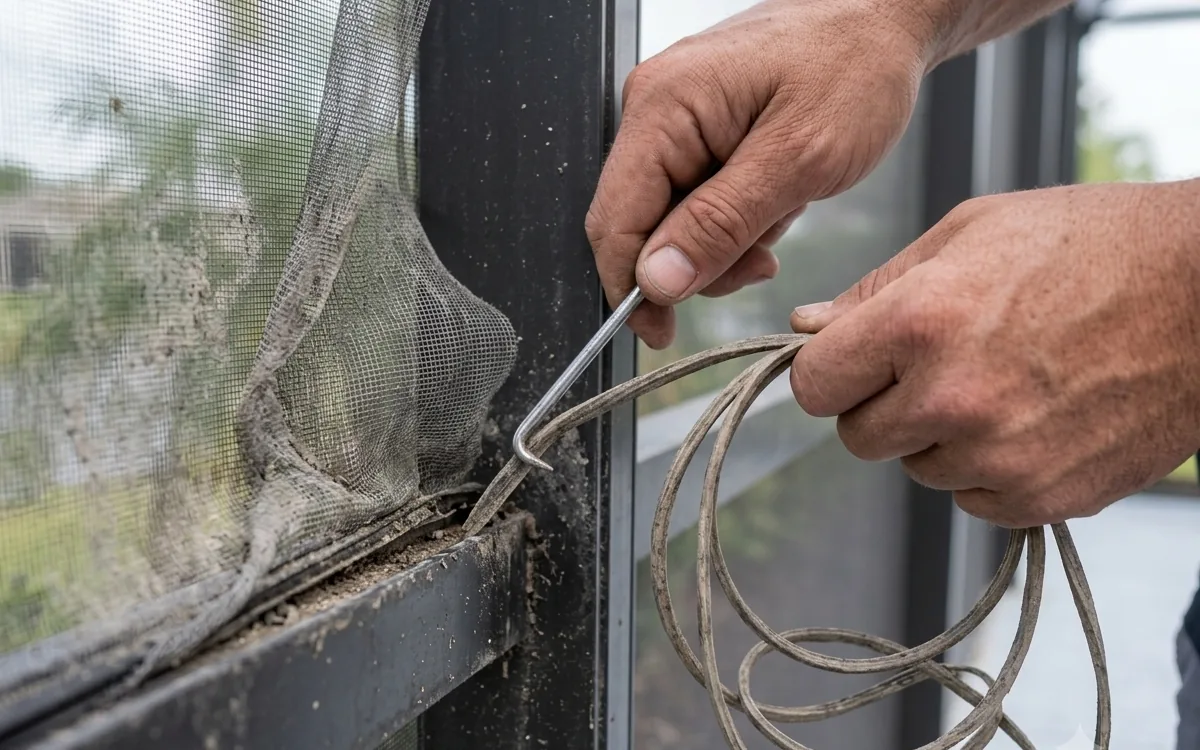
Rescreen or Replace the Whole Cage?
The four findings that push a Tampa pool enclosure past economical repair, and the honest math on each.
Read guide →Why these exist
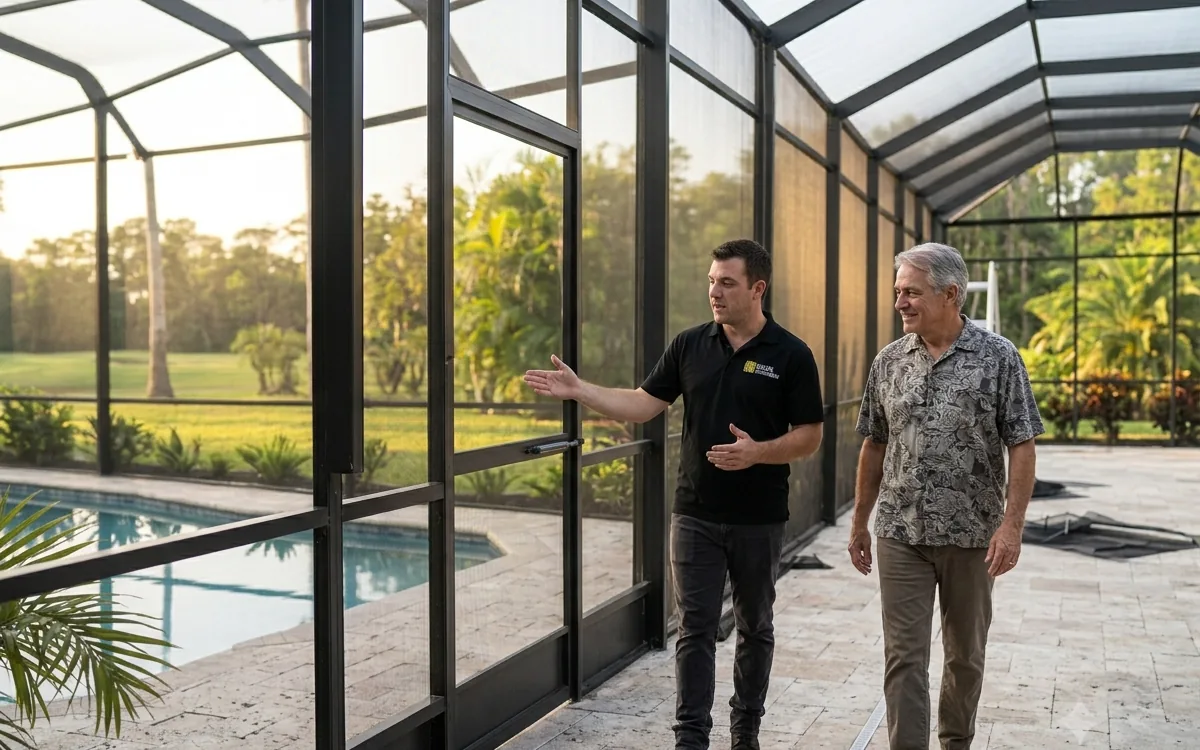
Pool cage rescreening is a trade where the homeowner has almost no way to judge a quote. You do not know whether $2,400 is fair for your cage. You do not know whether the roof panels are included. You do not know whether being told the frame is shot is honest or an upsell. That gap is where people get taken advantage of, and it is entirely fixable with information.
So we publish the mechanics. How to count your own panels in five minutes, why roof screens fail first, and how to pick mesh wall by wall instead of paying to upgrade a whole cage unnecessarily.
Who writes them
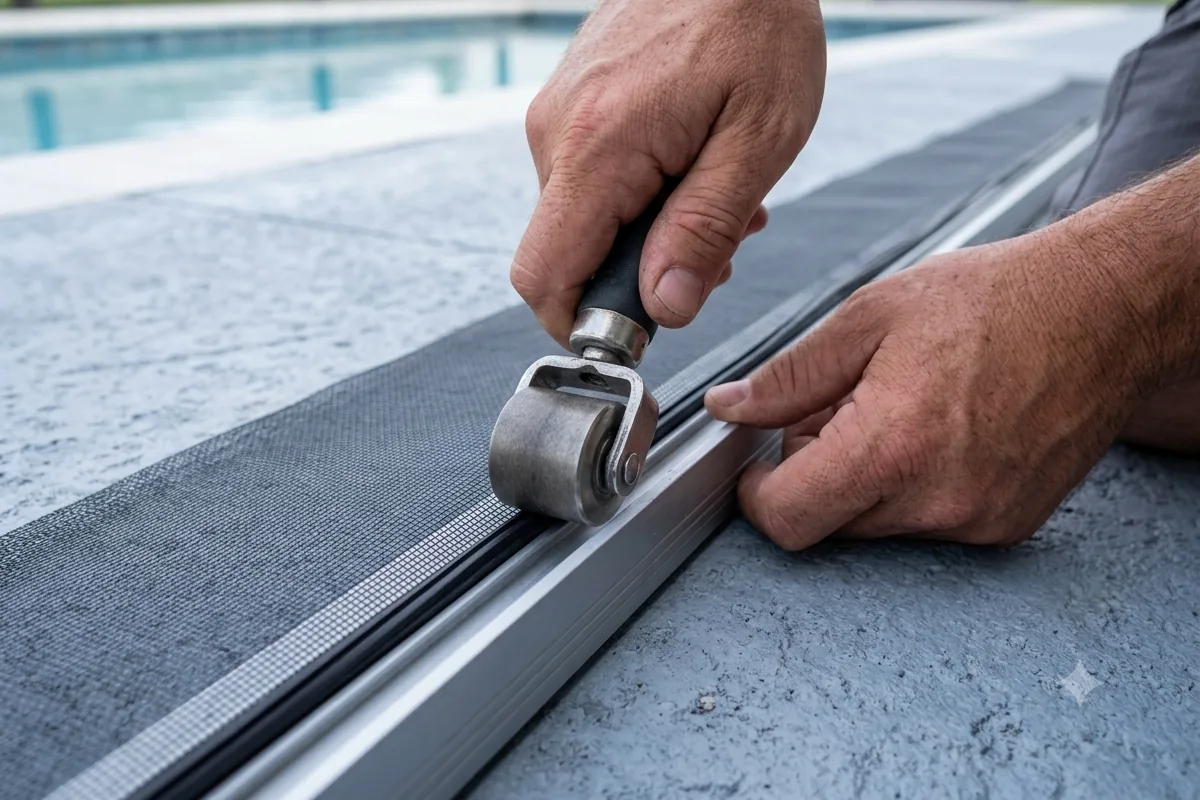
Working installers rather than a marketing agency. That matters because most of the useful detail in this trade is the kind you only learn by getting it wrong once. Mesh grain direction, spline sizing, the fact that a new panel beside six-year-old mesh looks obviously wrong for a year — none of that appears in a product brochure and all of it changes what you should ask for.
It also means we occasionally publish something that costs us work. The maintenance schedule exists partly to help people work out that they have three good seasons left. Worse for this month, better for the referral in three years.
What we will not publish
There is a genre of contractor blogging that exists purely to rank — a thousand words that circle a keyword without ever committing to a number. We would rather publish a figure and be held to it. Every price range on this site is what we actually quote, which means you can use these guides to judge our quotes as easily as anyone else’s. That is the trade, and it seems like a fair one.
We also will not publish anything that only works if you do not check it. If a mesh upgrade does not earn its cost on your cage, the guide says so. If your roof panels have three seasons left, we would rather you knew that than spent money this year on our say-so.
Start here
If you are holding a quote and trying to judge it, read the panel counting guide first — a count is what makes two quotes comparable. If you already know you need work and are choosing materials, go to the mesh by wall guide. And if you are weighing repair against replacing the whole structure, the rescreen or replace guide walks the four findings that decide it.
Questions
Pool cage questions we get most
What a full cage rescreen costs. Single-story enclosures run $1,100 to $2,000 in Tampa and two-story cages $1,900 to $3,400. It comes up constantly because almost nobody in this trade publishes numbers, so homeowners have no reference point for judging a quote.
Stand at one corner and count the framed openings along each wall, then count the roof panels separately by looking straight up, then add the kick plate row and the door. Photograph each wall as you go. Fifteen minutes gets you a number that makes every quote you receive comparable.
Sun exposure. Roof and gable screens sit under direct UV all day rather than for part of it, so they age at roughly double the rate. On most Tampa cages the roof panels are visibly worse than the walls, which is exactly why leaving them out of a quote makes it look cheaper.
Almost never. Upgrade by zone. No-see-um only on the walls where insects actually get through, pet mesh only on the lower rows if you have dogs, Florida Glass only on the kick plate row. Upgrading uniformly typically doubles the material cost for benefit you get on two walls.
Five to eight years for standard fiberglass on wall panels, four to six on roof panels and on unshaded south and west walls. Waterfront property sits shorter because salt attacks the fasteners. Pet-resistant polyester runs eight to twelve but only earns that on the lower rows.
Reused spline or mesh grain run the wrong way, in most cases. Mesh does not stretch appreciably in its first year, so early sagging is an installation problem rather than a materials one. Dried spline no longer fills the channel and screen run across its weak axis bags out through tall panels.
When most uprights are corroded through, when the footer itself has failed, or when the structure was undersized for the wind code it was built to. Individual corroded members, failed fasteners and pulled anchors are all economical fixes. We will tell you plainly which side of that line you are on.
Start with the panel counting guide. Walking into three quotes already knowing your own wall, roof and kick plate counts changes the conversation entirely, and it makes it immediately obvious if one company is pricing a smaller cage than the others are.
Find out what your cage costs
We come out, count every panel including the roof, check the frame, and hand you a flat written price. No deposit, no obligation.
Mon–Sat 7:00am–7:00pm · Licensed & insured · Hillsborough County & south Pasco