
Service · Tampa, FL
No-See-Um Pool Screening in Tampa
A tighter 20×20 weave for waterfront and wooded lots. Install it on the two or three walls the insects actually come from, not all four.
When standard screen is not stopping the bites
Standard 18×14 pool screen stops mosquitoes and flies comfortably. It does not stop no-see-ums — the biting midges and sand gnats that come off mangroves, wetlands, lakes and wooded lots around dusk. They are small enough to pass straight through the weave, which is why you can be bitten sitting inside a perfectly intact cage.
No-see-um mesh is a tighter square weave, twenty strands per inch in both directions rather than eighteen by fourteen. That closes the gaps. It is the only reliable screening answer to the problem, and no amount of rescreening in standard mesh will fix it.
The trade-off, stated plainly
A tighter weave restricts airflow and cuts visibility slightly. On a Florida evening, airflow through a pool cage is a meaningful part of why the space is pleasant to sit in, and wrapping an entire enclosure in 20×20 makes it noticeably stiller.
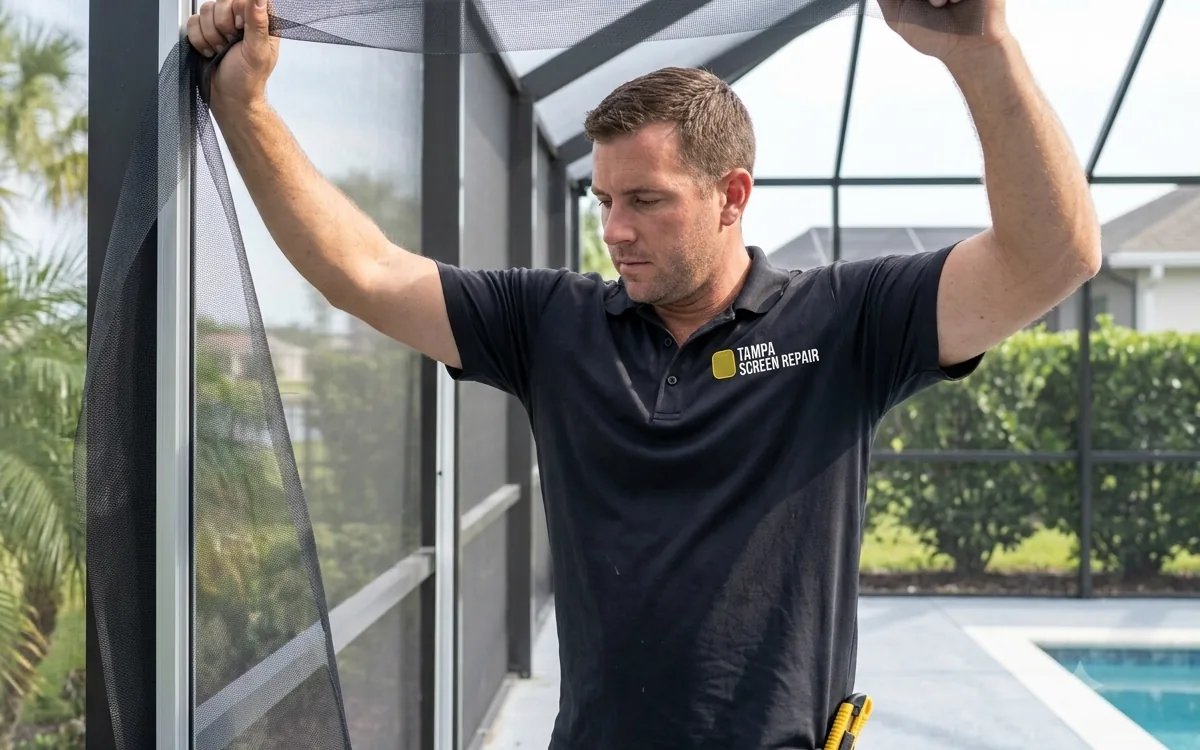
Which is why we almost never install it on all four walls. Insects come from a direction — the water, the wetland, the tree line. Put no-see-um on the two or three walls facing that source and keep standard mesh on the rest, and you get the bite protection while the cage still breathes.
Cost
| Item | Typical range | What moves it |
|---|---|---|
| Per square foot upgrade | +$0.60 – $1.40 | Above standard rescreen |
| Two walls, typical cage | +$180 – $420 | Wall size and count |
| Three walls | +$260 – $600 | Most common choice |
| Whole cage | +$400 – $950 | Rarely recommended |
| With a full rescreen | Quoted per wall | Itemised on the count |
| Retrofit to existing cage | Panel price + upgrade | Panels replaced individually |
Where it matters most in Tampa
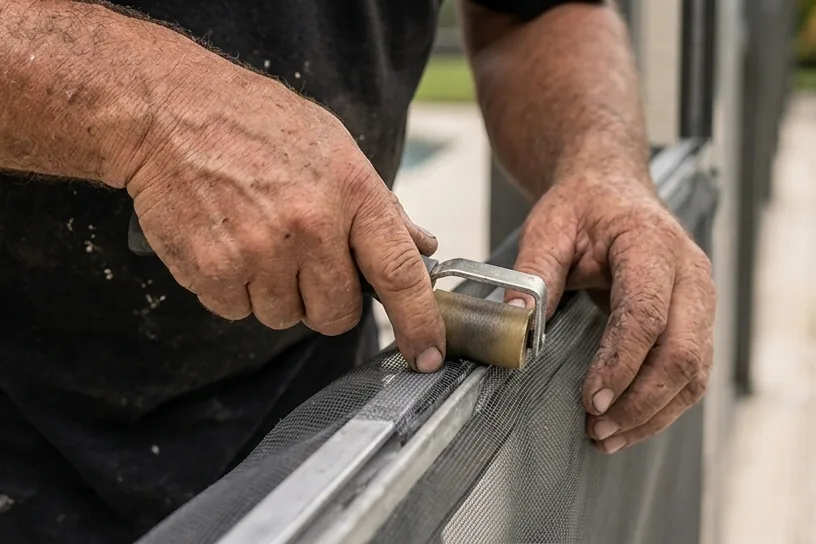
Waterfront and canal property in Apollo Beach and South Tampa gets the heaviest midge pressure we see anywhere. Lake-adjacent property in Lutz and Odessa is close behind. Wooded lots in New Tampa and preserve-edge homes in Westchase also see enough to justify it.
What it will not fix
No-see-um mesh addresses insects coming through the screen. It does nothing about insects coming through a gap at the base of a panel, around a poorly fitting cage door, or where spline has backed out of a channel. We check those first, because occasionally the answer is a $95 door adjustment rather than a $400 mesh upgrade.
Combining with other upgrades
No-see-um on the upper walls and pet mesh on the lower rows is a common and sensible combination on a family cage near water. Both get specified during the rescreen so it is one visit and one setup.
Questions
No-See-Um Pool Screening FAQs
A tighter square weave, twenty strands per inch in both directions rather than the standard eighteen by fourteen. Those extra strands close the gaps that biting midges and sand gnats pass through. It is the only reliable screening answer to no-see-ums.
Only if you are being bitten inside an intact cage, typically around dusk. If standard screen is keeping the mosquitoes out and nothing is biting you, there is no benefit and you would be paying for reduced airflow. It is a targeted fix, not a general upgrade.
Almost never. The tighter weave noticeably reduces airflow, and on a Florida evening that matters. Insects come from a direction, so putting it on the two or three walls facing the water, wetland or tree line gives you the protection while the cage still breathes.
$0.60 to $1.40 per square foot above a standard rescreen. Doing two walls on a typical cage adds $180 to $420, and three walls $260 to $600. Doing the entire enclosure runs $400 to $950 and is rarely the right call.
Sit outside at dusk for two or three evenings and notice which direction they are coming from. It is nearly always the side facing water, wetland or heavy tree cover. Fifteen minutes of observation routinely saves several hundred dollars of unnecessary upgrade.
Slightly. The tighter weave cuts a little visibility and a little light compared with standard mesh. It is a smaller difference than most people expect, and considerably less noticeable than the airflow reduction, which is the real trade-off.
About the same as standard fiberglass, five to eight years in Tampa, because both are limited by UV rather than by weave density. It is not a durability upgrade, it is an insect upgrade. Do not expect extra service life from it.
Yes, easily. Standard 18x14 already stops mosquitoes, so anything tighter certainly does. No-see-um is specifically about the much smaller biting midges and sand gnats that standard weave lets straight through.
Yes. We can replace specific panels or whole walls with no-see-um weave and leave the rest alone, priced per panel plus the upgrade. That is often the smartest approach, since you can trial one wall and see whether it solves the problem.
Worth checking before you spend anything. Gaps at the base of panels, a poorly fitting cage door and spline backed out of a channel all let insects in past perfectly good mesh. We check those first, because sometimes the fix is a door adjustment rather than a mesh upgrade.
Related
Other enclosure work
Get a price for your cage
Free on-site panel count with every opening written down, including the roof. Flat written price before any work starts.
Mon–Sat 7:00am–7:00pm · Licensed & insured · Hillsborough County & south Pasco